
par Raúl | Juil 16, 2026 | Anglais de base A2
To make a sentence negative in the past simple, you use the auxiliary verb did with not, followed by the base form of the main verb. This means the main verb does not change its form. The most common way to say this is using the contraction didn’t. For example,...
par Raúl | Juil 16, 2026 | Anglais de base A2
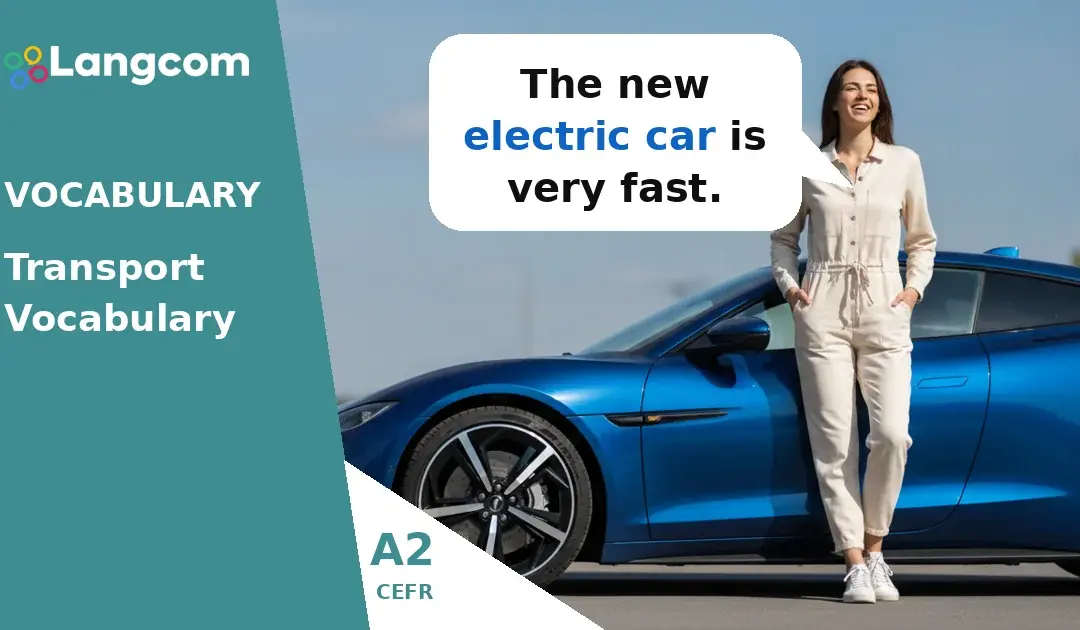
Adjectives help us describe things, including different types of transport. When you talk about a car, a bus, or a train, you can use adjectives to explain how it feels, how it moves, or its condition. For example, you can say a train is fast or a bus is crowded....

par Raúl | Juil 16, 2026 | Anglais de base A2
Learning transport vocabulary helps you talk about how you travel every day and when you go on holiday. We use words like car, bus, train, and plane to name different ways to move from one place to another. It’s important to know these words to ask for...

par Raúl | Juil 16, 2026 | Anglais de base A2
The letter ‘a’ in English has four common sounds, not just one, which is key to clear A2 pronunciation. Unlike Spanish, where ‘a’ typically makes a single, consistent sound, English ‘a’ is much more flexible and can be pronounced in...

par Raúl | Juil 16, 2026 | Anglais de base A2
Past Simple irregular verbs are special words in English that do not follow the normal rule of adding ‘-ed’ to form their past tense. Instead, they change their form in unique ways. For example, the verb go becomes went, and eat becomes ate. These verbs...

par Raúl | Juil 15, 2026 | Anglais de base A2
The Past Simple positive form tells us about actions that started and finished in the past. We use it to describe events that are completely over, like I visited my friend yesterday. or She ate pizza last night. It’s essential for telling stories, talking about...
